

‘
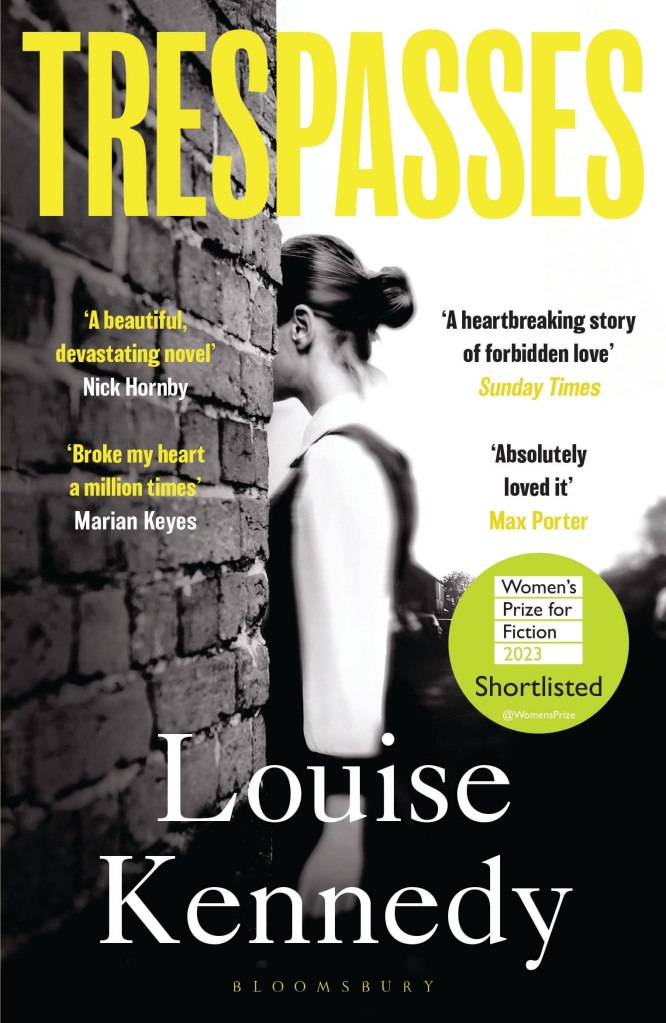
There is nothing special about the day Cushla meets Michael, a married man from Belfast, in the pub owned by her family. But here, love is never far from violence, and this encounter will change both of their lives forever.
As people get up each morning and go to work, school, church or the pub, the daily news rolls in of another car bomb exploded, another man beaten, killed or left for dead. In the class Cushla teaches, the vocabulary of seven-year-old children now includes phrases like ‘petrol bomb’ and ‘rubber bullets’. And as she is forced to tread lines she never thought she would cross, tensions in the town are escalating, threatening to destroy all she is working to hold together.

An incredible depiction of the sectarian violence and divisions in Belfast during the heights of the Troubles in the 1970s, and the ways in which people found the chance to connect despite that context…
What I Liked
- The depiction of the brutality and insidious conflict of the Troubles
- The tender if difficult relationship between Cushla and her aging alcoholic mother
- The detail and the minutiae of life that inhabited the novel
- The soundscape of the novel – and the smell: there is something very sensory in Kennedy’s writing
What Could Have Been Different
- Cushla could have had a lot more agency as a character and more assertiveness as a person
- Michael’s character could have been fleshed out more… I’m not entirely sure I knew him

Set in the 1970s Belfast, Cushla is a primary school teacher at St Dallan’s Catholic School during the day, intermittently helps at her brother’s pub in the evenings and spends the rest of her time managing her irascible mother’s increasing alcoholism. Kennedy expertly weaves together the mundanity of Cushla’s life – ineffective storage heaters, making toast for her mother – with the horrors of the Troubles. Her neighbour is
“a prison officer who claimed to be a civil servant, checking under his car for a bomb. His wife was watching from the doorstep in a turquoise nightgown, holding their dog”
and her students’ news that contains words like
“Booby trap. Incendiary device. Gelignite. Nitroglycerine. Petrol bomb. Rubber bullets. Saracen. Internment. The Special Powers Act. Vanguard. The vocabulary of a seven-year-old child now.”
Into this mundane life come two men – or at least one man and one boy – who disrupt her existence. First, we have Davy, the seven year old boy whom Cushla reaches out to when his father is beaten bloody and left for dead in the sectarian violence; the other is Michael Agnew, the married Protestant barrister whom Cushla serves in her brother’s pub one night and is instantly attracted to. With Davy, we see Cushla’s maternal feelings blossom; with Michael, her sexual and sensual feelings bloom.
If I had a criticism of the novel – or perhaps of the world in which the novel is set and which it recreates – it is Cushla’s lack of agency in her relationship with Michael. She is the stereotypical ‘other woman’ lingering by the phone for a call or an invitation, taking on more shifts at the bar on the off-chance that she will see him again, knowing that “he would never give her more than this”. She is invited by him to his friends’ informal Irish Conversation lessons – which seemed more like an excuse for a party than anything else, but in the context is itself rather subversive. Michael is in many ways a closed book to us as the reader which I found frustrating: he is a lawyer taking on controversial cases, much to the concern of his Protestant friends, but we never hear anything about those cases save for overheard snippets of conversation and Cushla sneaking looks into files he brought home; he is married and has children but we never see him at home, only in his town house, and there is only one excruciating moment when Cushla’s life overlaps with Michael’s family and they meet. Am I sure that Michael had more feelings for Cushla than that of an older lothario exploiting a somewhat vulnerable younger woman? I’m not sure I see enough from his point of view to be confident of that. Rather than getting to know Michael, though, Kennedy does give us a convincing and powerful exploration of the effect Michael has on Cushla and there is no doubt of the depth with which she loves him.
For me, however, Cushla’s relationship with Rory was more interesting and compelling – the little boy in her school who, despite his family’s situation, is always the first to put his hand up and is generally unbowed by his challenges. And his family’s situation is dire: a mixed marriage across the Protestant-Catholic lines means that Davy’s father cannot find work, that his mother cannot put washing on the line without the neighbours cutting the line down or throwing “dog dirt” at the washing. And it is his father who is beaten horrifically which prompts Cushla to support the family, to protect Davy from the horrific Father Slattery and his violent stories of vengeance and sinister offers of “private catechism”, to ask the school to provide free meals… Kennedy explores how, with the best intentions, other people’s pettiness and politicking can lead to unexpected and horrific outcomes.
In the aftermath of the tragedy in the novel, as Cushla is interviewed by – confronted by – the police, the terrible extent of official espionage into the private lives of citizens is revealed. And those moments are truly genuinely chilling.
In many ways, Kennedy’s novel – a debut, although she has published short stories before – is rather traditional: we are in the third person, past tense, chronological structure. It reminded me an awful lot of Clare Chambers’ Small Pleasures, both in that traditional style – reflecting the traditional world that the novels were set in – the historical setting, the over bearing mothers, the relationships with married men – but Kennedy’s felt much more visceral and raw somehow. And a part of the is her language: there is a sensuousness to her words as she evokes the smells and the soundscape of Cushla’s world and the minutiae and details of both daily domestic life and the Troubles. There was something hideously pathetic when Cushla and a co-worker Gerry are stopped on the way to a party by armed soldiers and Gerry is made to stand under a “length of loose guttering [that] was drooling thick, rusty liquid on to his forehead” and later Cushla notices on the back of his shirt “there were five small interlocking rings in a pattern like the Olympics logo, where the soldier had poked him with his greasy gun”; and alongside this we have the sounds of domestic life – “suck of the fridge door, the soft dunt of it closing” – and of people’s heightened reactions to the noise of a car engine outside.
It was, overall, an extraordinary and powerful depiction of the Troubles, in which there was also a love story.
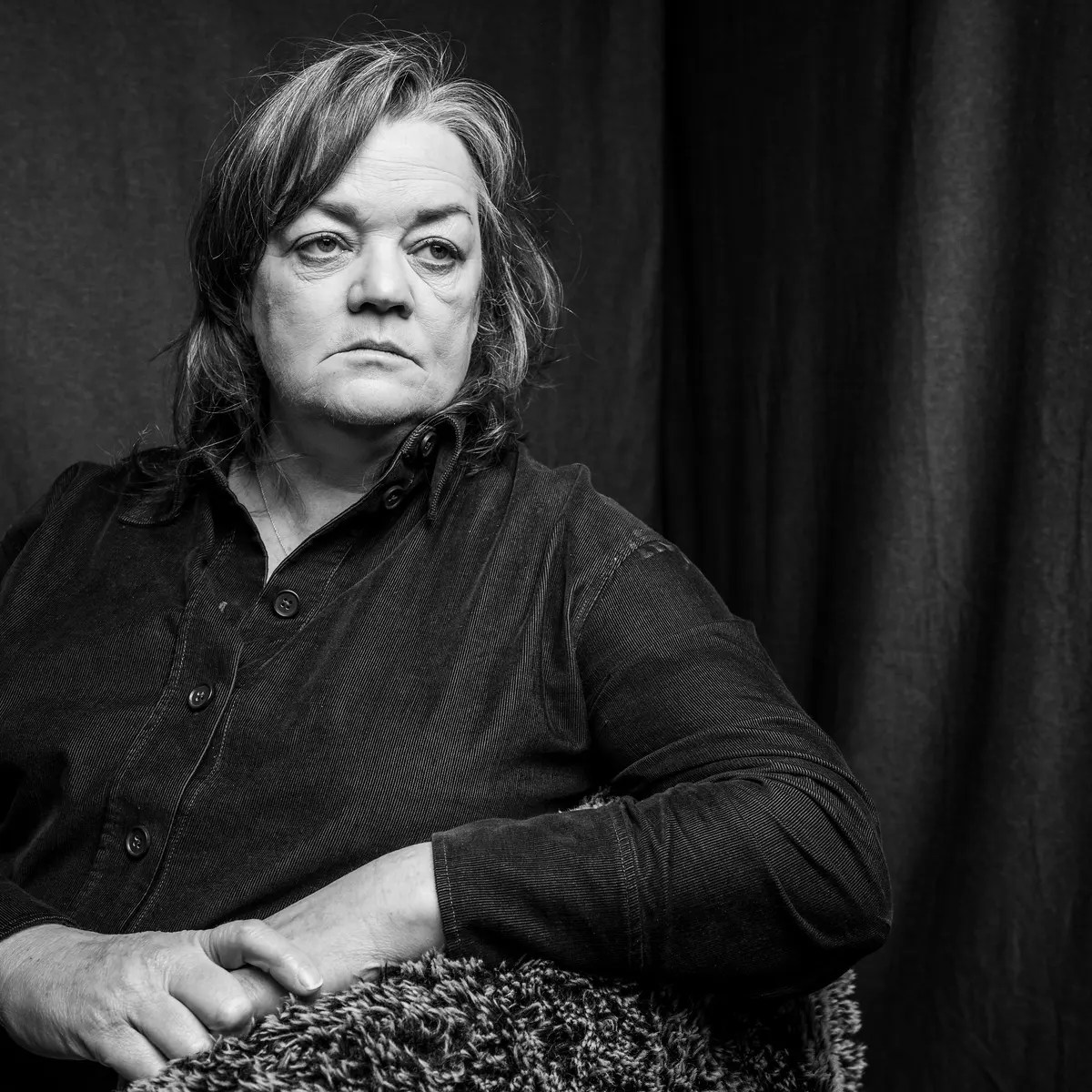
Louise Kennedy grew up near Belfast. Trespasses is her first novel. She is also the author of a collection of short stories, The End of the World Is a Cul de Sac. She has written for The Guardian, The Irish Times, and BBC Radio 4. Before becoming a writer, she worked as a chef for almost thirty years. She lives in Sligo, Ireland.

Overall
Characters:
Plot / Pace:
Worldbuilding:
Structure:
Language:
Page Count:
320 pages
Publisher:
Date:
30th March 2023


[…] Trespasses, Louise […]
LikeLike
[…] Trespasses, Louise Kennedy […]
LikeLike
[…] Trespasses, Louise Kennedy […]
LikeLike
[…] Trespasses, Louise Kennedy […]
LikeLike