Top Ten Tuesday was created by The Broke and the Bookish in June of 2010 and was moved to That Artsy Reader Girl in January of 2018. It was born of a love of lists, a love of books, and a desire to bring bookish friends together.
Previous Top Ten Tuesday Topics
- 11th July: Freebie: Books Set in Rome
- 18th July: Books With One-Word Titles
- 25th July: Ten Most Recent Books I Did Not Finish
- 1st August: Forgotten Backlist Titles
- 8th August: Books I’ve Read/Want to Read Because of Top Ten Tuesday
- 15th August: Bookshops in Rome I Am Excited For
- 28th August: Water
The new school year has now begun and summer is over: my daughter has had her first day at her new school, a slew of paperwork has been thrown at me at work, another heatwave has (somewhat gently) gripped the UK. And the backlog of reviews on my blog is continuing to grow: finishing two books last night was both satisfying and a little overwhelming!
This week’s theme is also one that deserves a little thought: books that defied my expectations, Submitted by Sia @ everybookadoorway.com, which is glossed as books you thought you would didn’t like that you loved, books you thought you’d love but didn’t, books that were not the genres they seemed to be, or in any other way subverted your expectations! Sometimes, it’s great to get a book that does exactly what you expect: a favourite author, a favourite genre, a title like The Kaiju Preservation Society or The Southern Book Club’s Guide to Slaying Vampires which really do give you a heads up about the content. But this post celebrates those that unsettled and defied my expectations.





Children of Paradise, Camilla Grudova
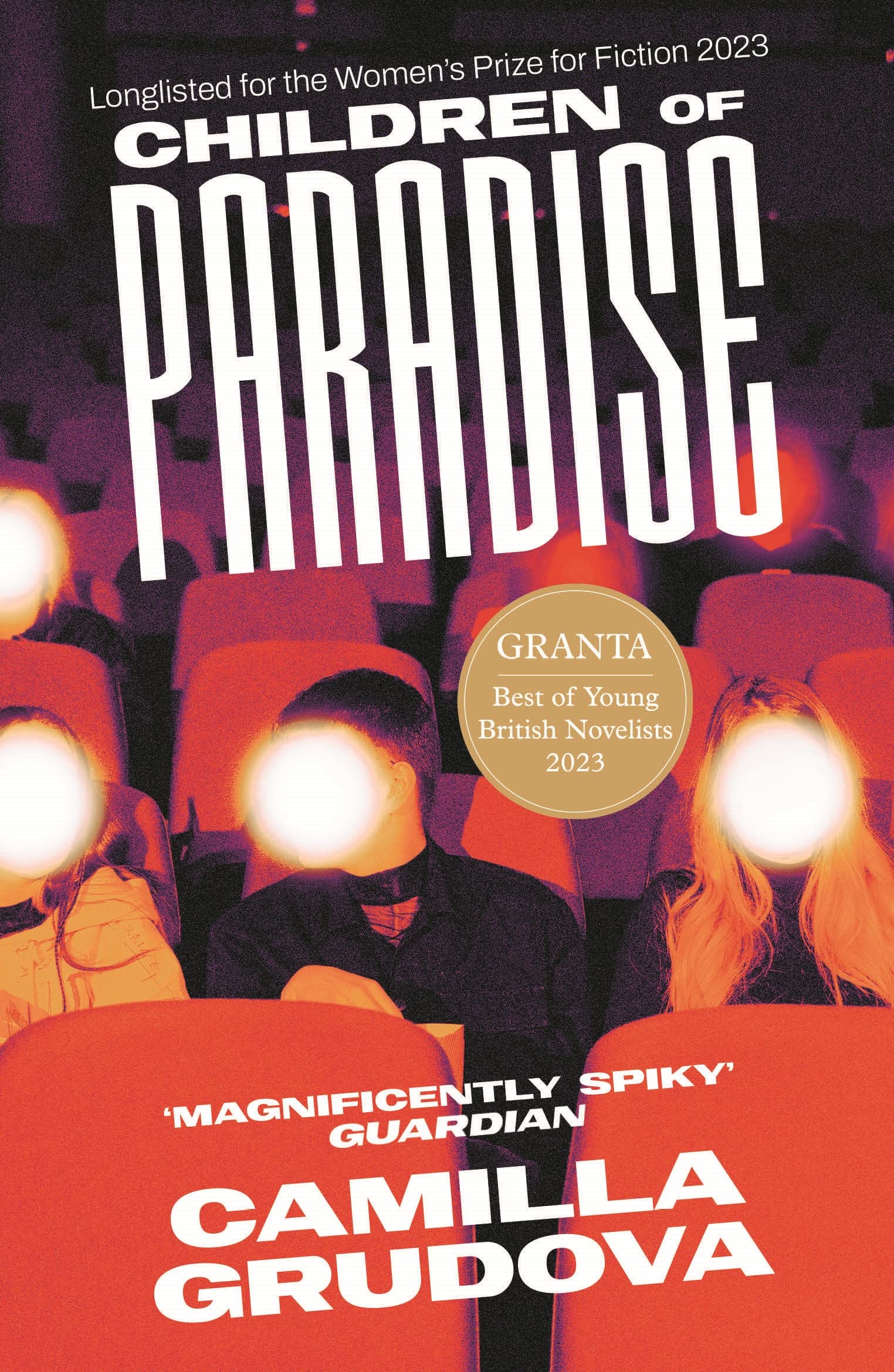
When Holly applies for a job at the Paradise – one of the city’s oldest cinemas, squashed into the ground floor of a block of flats – she thinks it will be like any other shift work. She cleans toilets, sweeps popcorn, avoids the belligerent old owner, Iris, and is ignored by her aloof but tight-knit colleagues who seem as much a part of the building as its fraying carpets and endless dirt. Dreadful, lonely weeks pass while she longs for their approval, a silent voyeur. So when she finally gains the trust of this cryptic band of oddballs, Holly transforms from silent drudge to rebellious insider and gradually she too becomes part of the Paradise – unearthing its secrets, learning its history and haunting its corridors after hours with the other ushers. It is no surprise when violence strikes, tempers change and the group, eyes still affixed to the screen, starts to rapidly go awry…
This was one of those novels that made you wonder what you were reading… there was so much grubbiness in it that it became almost lyrical, the cinema itself almost feeling sentient, owned by the eccentric Iris (a generous description of her perhaps), staffed by obsessives, haunted with myseterious secret screens that came and went…
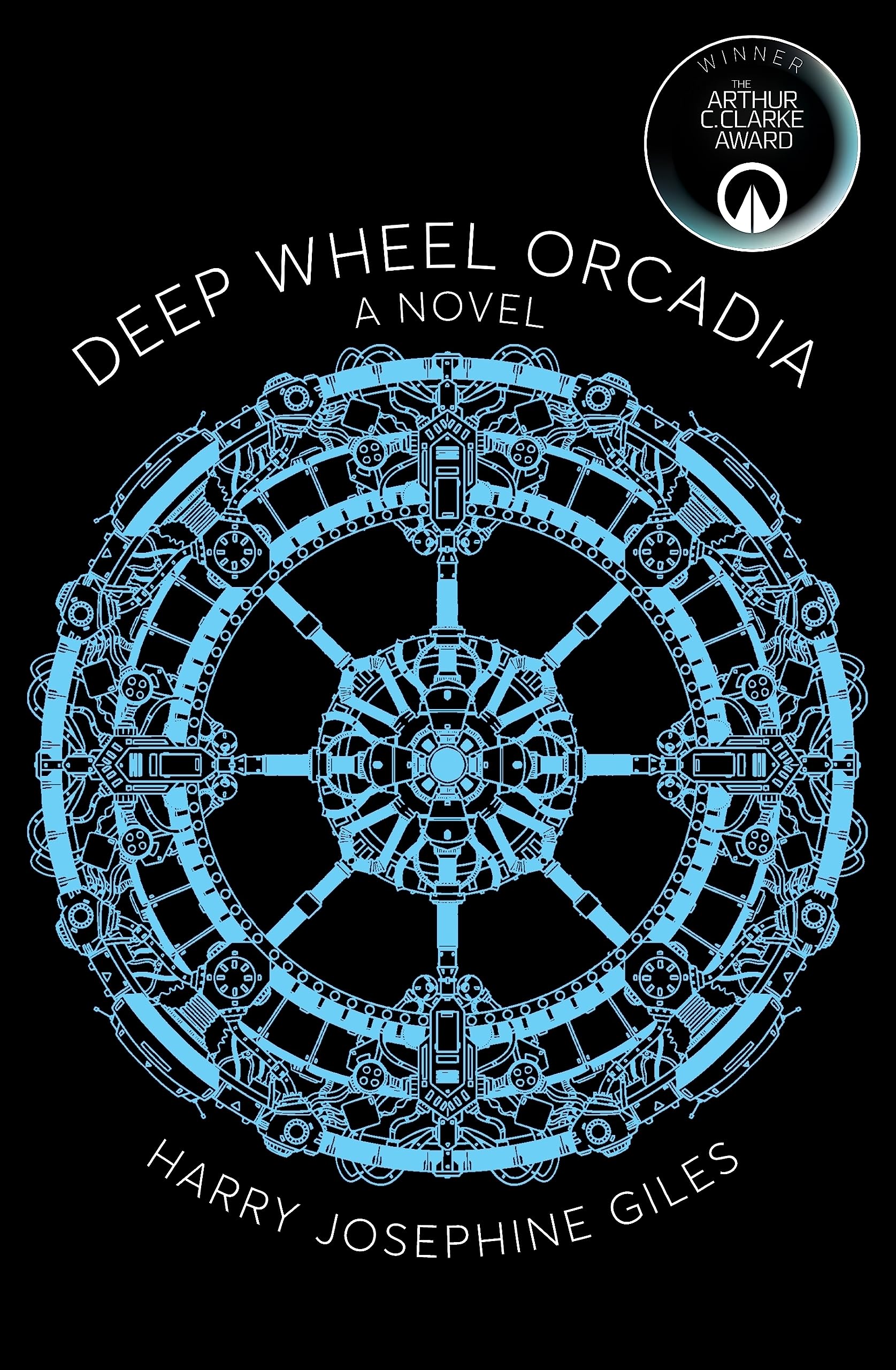
Deep Wheel Orcadia, a novel, Harry Josephine Giles

Astrid is returning home from art school on Mars, looking for inspiration. Darling is fleeing a life that never fit, searching for somewhere to hide. They meet on Deep Wheel Orcadia, a distant space station struggling for survival as the pace of change threatens to leave the community behind.
I have been reading a lot more science fiction recently – which is a conscious choice – and perhaps because it is a genre I am less familiar with my expectations are more basic and therefore easier to defy but there is a range of science fiction in this list.
This one however is written in verse. And in the Orkney dialect. With an incredible and unique ‘translation’ alongside the Orkney.
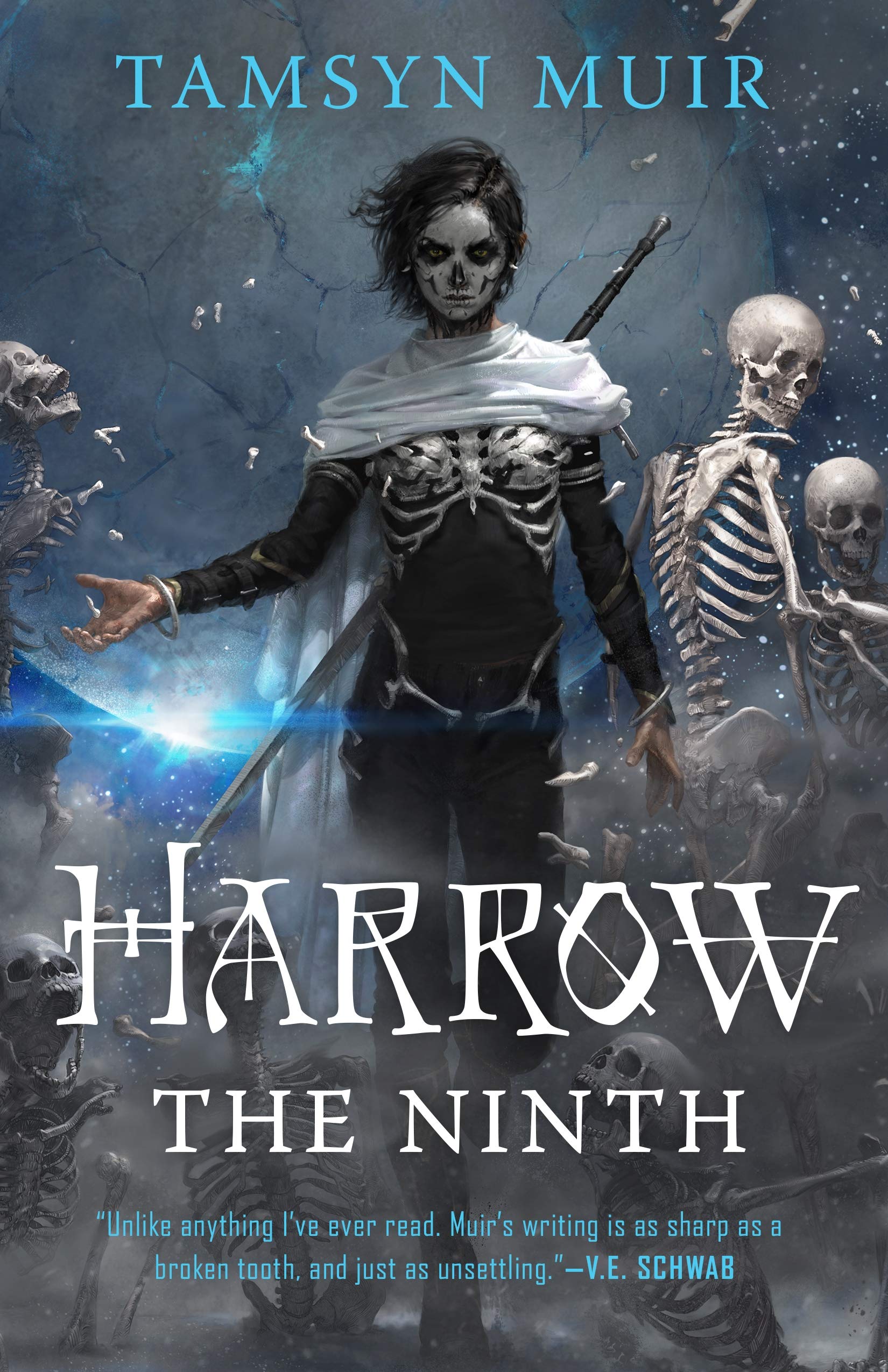
Harrow the Ninth, Tamsyn Muir
She answered the Emperor’s call.
She arrived with her arts, her wits, and her only friend.
In victory, her world has turned to ash.
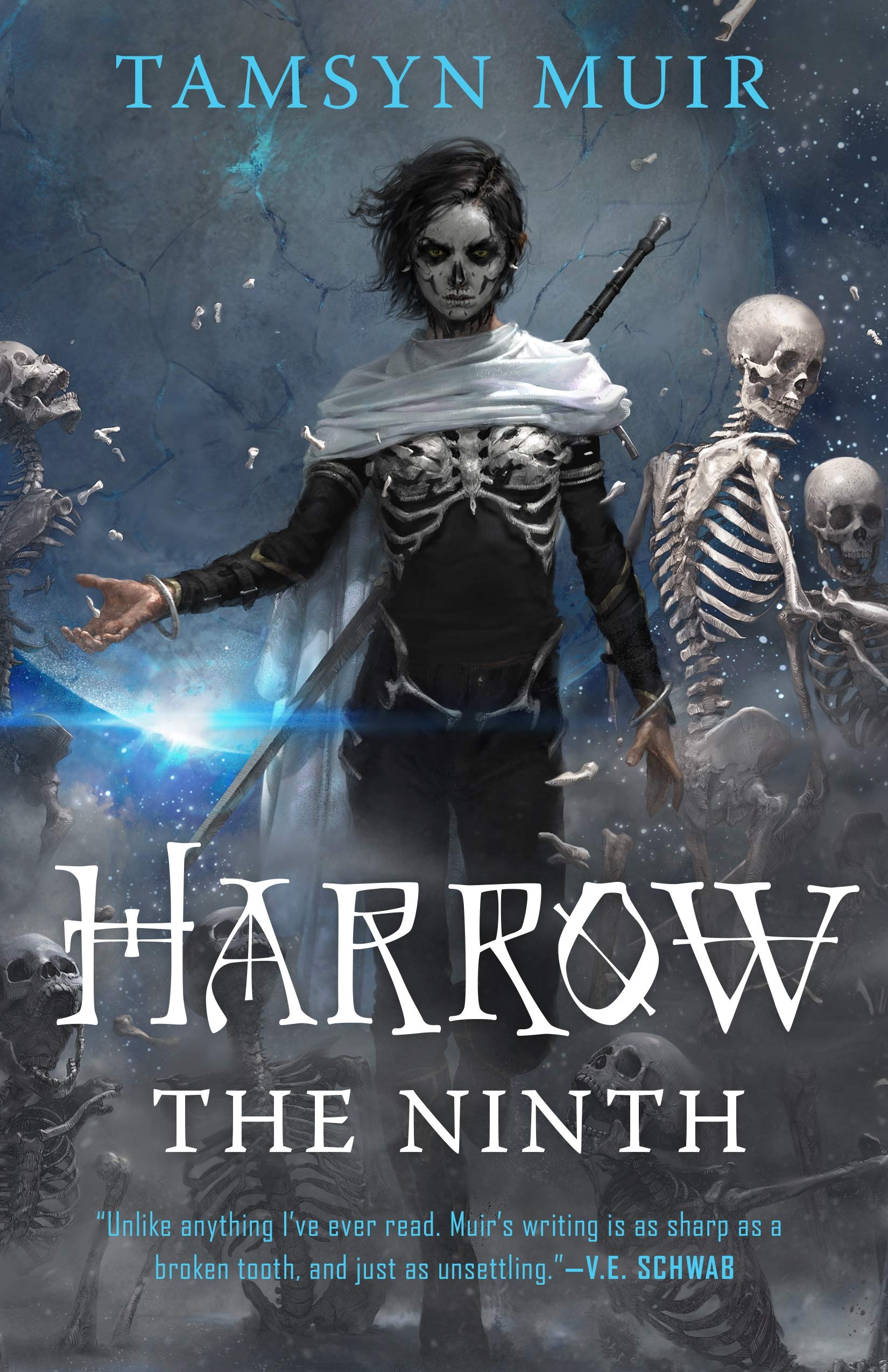
Harrowhark Nonagesimus, last necromancer of the Ninth House, has been drafted by her Emperor to fight an unwinnable war. Side-by-side with a detested rival, Harrow must perfect her skills and become an angel of undeath — but her health is failing, her sword makes her nauseous, and even her mind is threatening to betray her.
Sealed in the gothic gloom of the Emperor’s Mithraeum with three unfriendly teachers, hunted by the mad ghost of a murdered planet, Harrow must confront two unwelcome questions: is somebody trying to kill her? And if they succeeded, would the universe be better off?
I had enjoyed the first book of Tamsyn Muir’s Locked Tomb series immensely: it was a fun, violent romp through a haunted mansion, with a sassy main character in Gideon and a compelling enemies-to-lovers trope. Obviously, I felt that the sequel would continue that narrative… but no! Suddenly I was confronted by the second person narrative voice and time shifts and twisted re-imaginings of scenes from the first book… and where was Gideon?!
The Trees, Percival Everett

The Trees is a page-turner that opens with a series of brutal murders in the rural town of Money, Mississippi. When a pair of detectives from the Mississippi Bureau of Investigation arrive, they meet expected resistance from the local sheriff, his deputy, the coroner, and a string of racist White townsfolk.
The murders present a puzzle, for at each crime scene there is a second dead body: that of a man who resembles Emmett Till, a young black boy lynched in the same town 65 years before.
The detectives suspect that these are killings of retribution, but soon discover that eerily similar murders are taking place all over the country. Something truly strange is afoot. As the bodies pile up, the MBI detectives seek answers from a local root doctor who has been documenting every lynching in the country for years, uncovering a history that refuses to be buried.
I had never come across Everett until his inclusion on a Booker Prize shortlist and wasn’t sure what to expect. It was a novel that defied any genre, veering from social satire to police procedural to horror to political satire. In the hands of a lesser writer, it would have felt incoherent; Everett manages it with applomb.
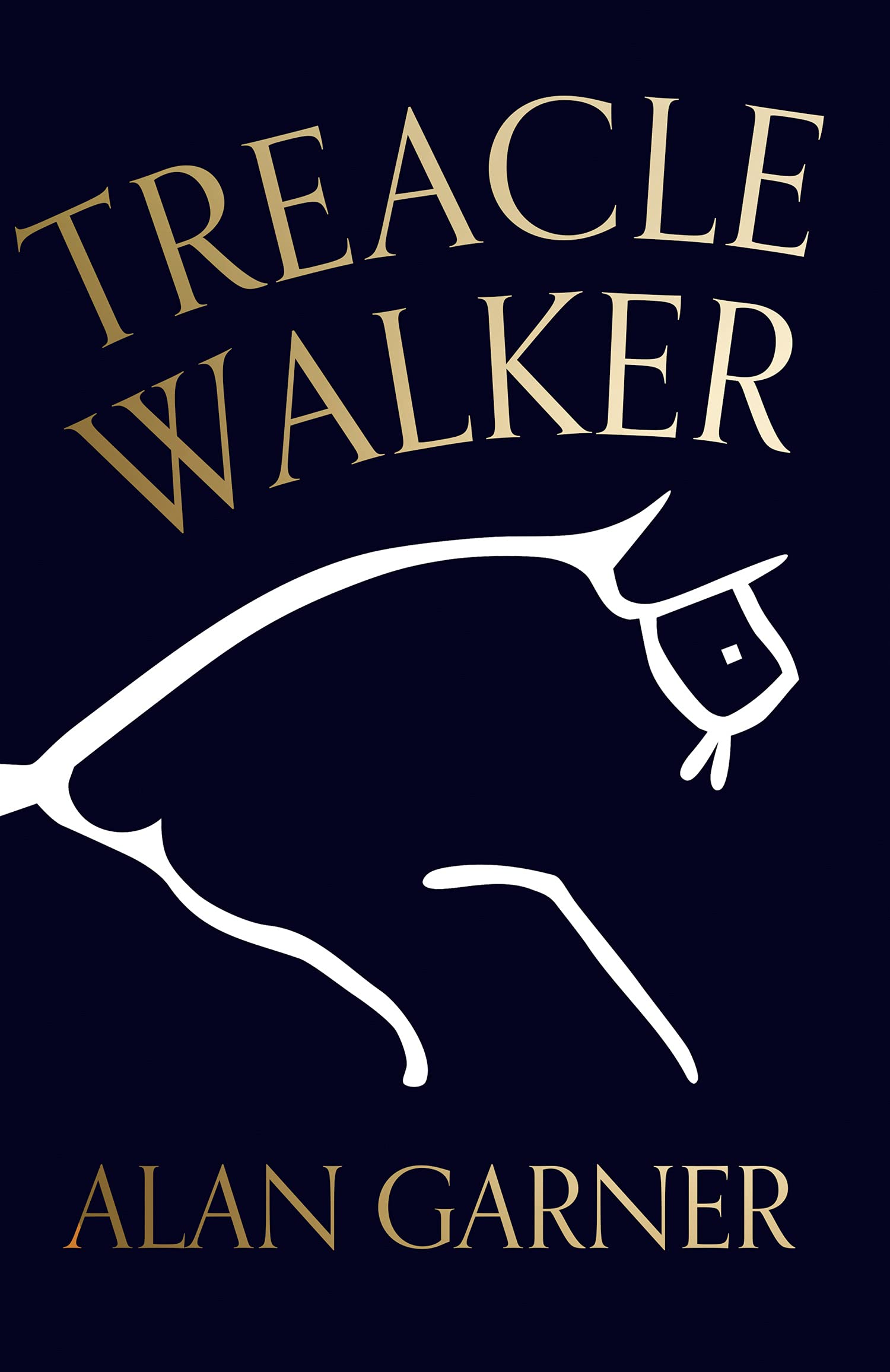
Treacle Walker, Alan Garner
‘Ragbone! Ragbone! Any rags! Pots for rags! Donkey stone!’
Joe looked up from his comic and lifted his eye patch. There was a white pony in the yard. It was harnessed to a cart, a flat cart, with a wooden chest on it. A man was sitting at a front corner of the cart, holding the reins. His face was creased. He wore a long coat and a floppy high-crowned hat, with hair straggling beneath, and a leather bag was slung from his shoulder across his hip.
Joe Coppock squints at the world with his lazy eye. He reads his comics, collects birds’ eggs and treasures his marbles, particularly his prized dobbers. When Treacle Walker appears off the Cheshire moor one day – a wanderer, a healer – an unlikely friendship is forged and the young boy is introduced to a world he could never have imagined.
This is another novel I only read because it was on the Booker Shortlist. I was vaguely aware of Garner but had – incredibly unfairly – pigeonholed him as old and out-of-date without having read any of his books. This is an old narrative, in the sense of it being mythical and folkloric and therefore part of an old tradition that is embedded in the bones of the nation…
Booth, Karen Joy Fowler
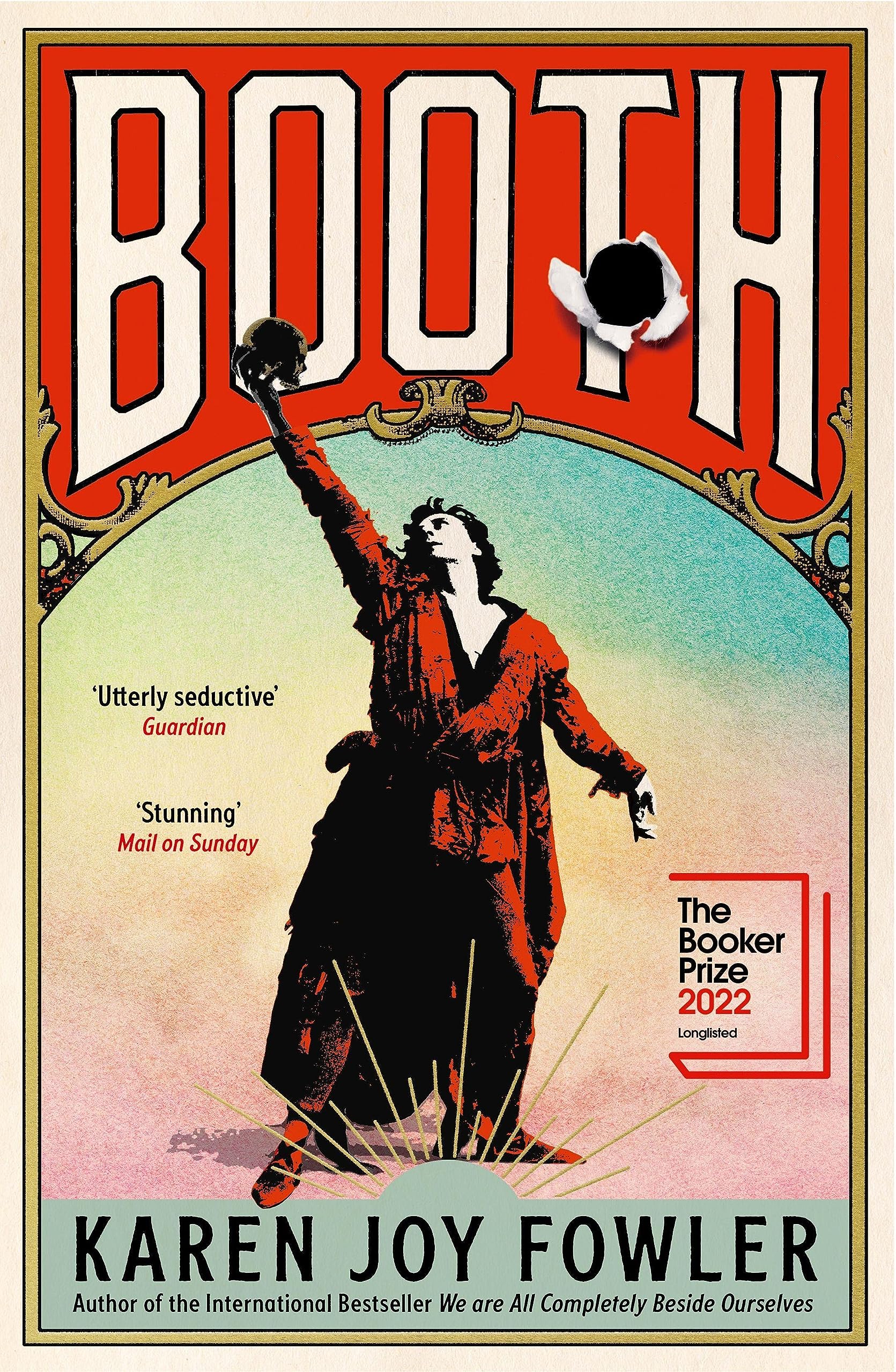
In 1822, a stage is set: Englishman Junius Booth – celebrated Shakespearean actor and man of mesmerising charm and instability – moves to a remote cabin outside Baltimore with his wife, who bears him ten children.
Of the six who survive infancy, one is John Wilkes – the hot-tempered but much-loved middle son who, in 1865, fatally shoots Abraham Lincoln in a Washington theatre, changing the course of history.
What makes a murderer? His family or the world? And how can those who love him ever come to terms with his actions? Strikingly relevant to the world today, Booth is the story of one extraordinary family and the terrible act that shattered their bonds forever.
I had only read We Are Completely Beside Ourselves by Fowler before which I had enjoyed but found a little… light perhaps, the reveal halfway through felt a tad disingenuous… but Booth blew me away with its historical setting, its ability to breathe life into characters and its evocation of that moment in history and that incredible family. Amazing.
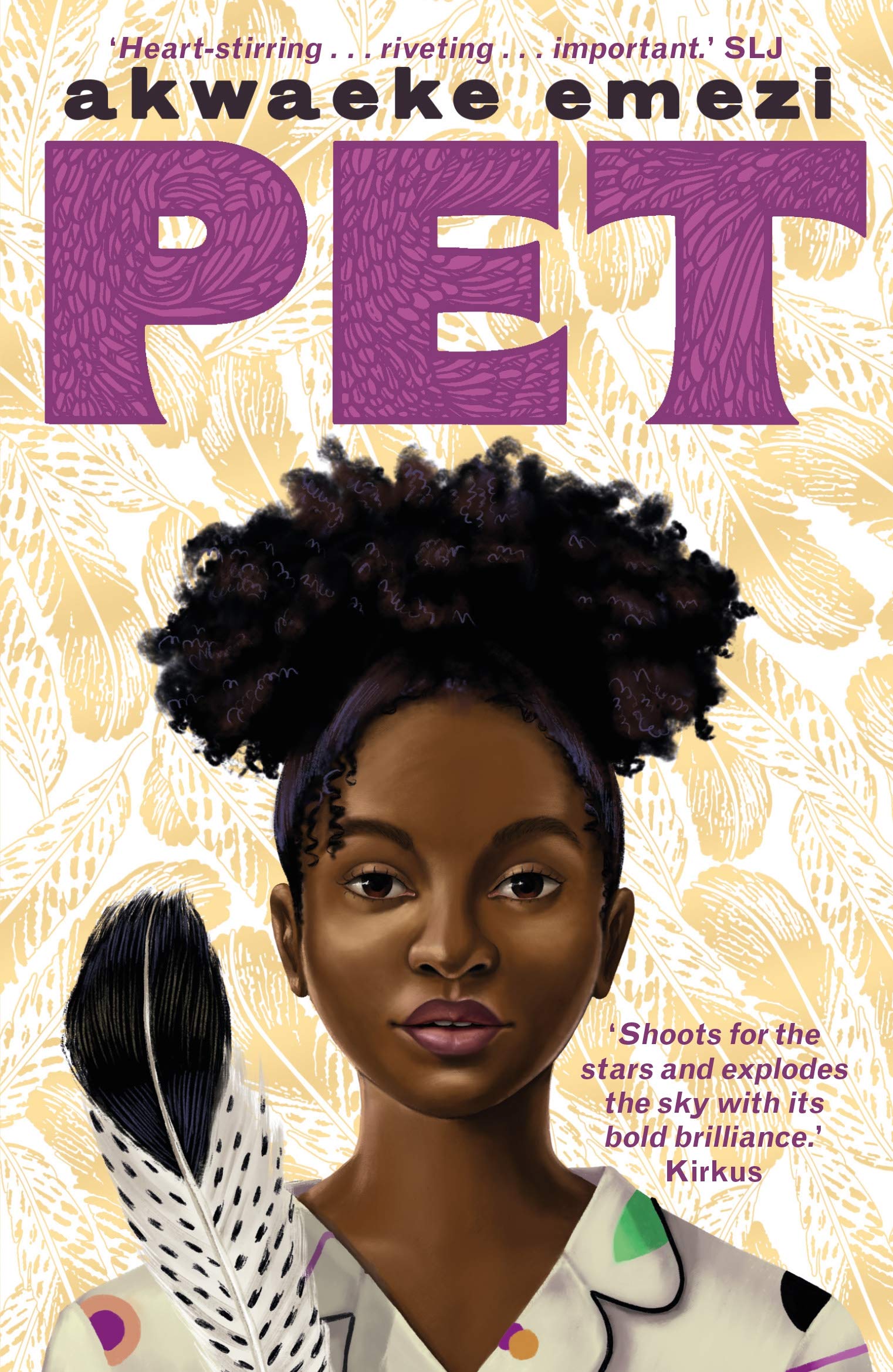
Pet, Akwaeke Emezi

How do you save the world from monsters if no one will admit they exist?
She stumbled backwards, her eyes wide, as the figure started coming out of the canvas
…
She tried to be brave. Well, she said, her hands only a little shaky, at least tell me what I should call you.
…
Well, little girl, it replied, I suppose you can call me Pet.
There are no more monsters anymore, or so the children in the city of Lucille are taught. With doting parents and a best friend named Redemption, Jam has grown up with this lesson all her life. But when she meets Pet, a creature made of horns and colours and claws, who emerges from one of her mother’s paintings and a drop of Jam’s blood, she must reconsider what she’s been told. Pet has come to hunt a monster, and the shadow of something grim lurks in Redemption’s house. Jam must fight not only to protect her best friend, but also to uncover the truth.
Extraordinary! That is perhaps the best word for this novel – it is very different from the semi-autobiographical and Nigerian settings of Emezi’s other work, and more searing, more potent, more urgent than one might expect from a YA novel.
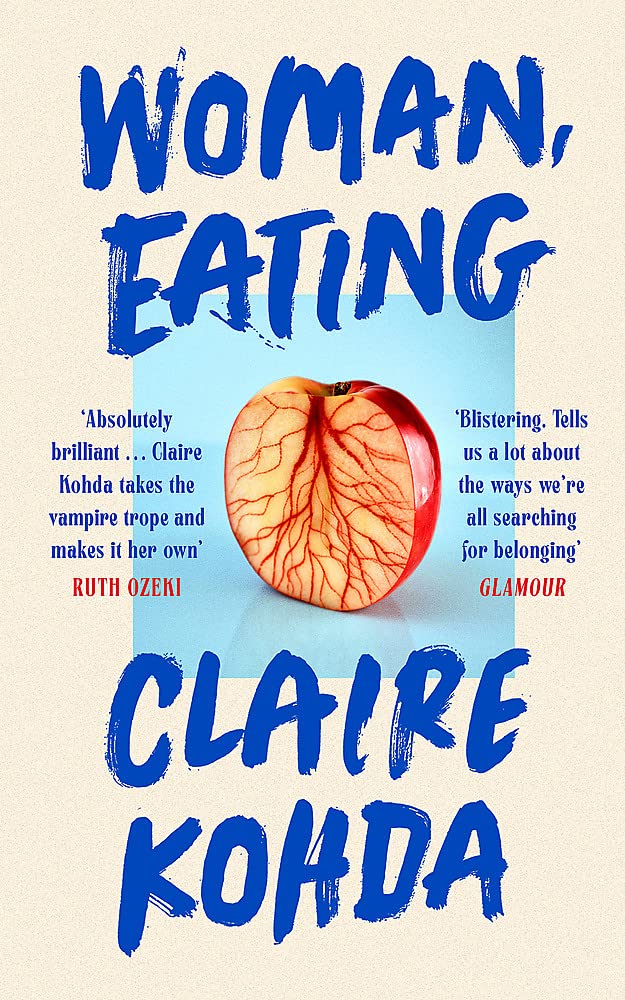
Woman Eating, Claire Kohda

Lydia is hungry.
She’s always wanted to try sashimi, ramen, onigiri with sour plum stuffed inside – the food her Japanese father liked to eat. And then there is bubble tea and the vegetables grown by the other young artists at the London studio space she is secretly squatting in. But Lydia can’t eat any of this. The only thing she can digest is blood, and it turns out that sourcing fresh pigs’ blood in London – where she is living away from her vampire mother for the first time – is much more difficult than she’d anticipated.
Then there are the humans: the people at the gallery she interns at, the strange men who follow her after dark, and Ben, a goofy-grinned artist she is developing feelings for. Lydia knows that they are her natural prey, but she can’t bring herself to feed on them.
If Lydia is to find a way to exist in the world, she must reconcile the conflicts within her – between her demon and human sides, her mixed ethnic heritage, and her relationship with food, and, in turn, humans.
Before any of this, however, she must eat.
Vampires have been done to (un)death, haven’t they? From the iconic Dracula and Drusilla to the sparkly de-fanged Cullen family, from Hammer horror films to What We Do in the Shadows, surely there is nothing new to be added to their mythology… Well, Claire Kohda’s gorgeously written novel would beg to differ!
A Psalm for the Wild Built, Becky Chambers
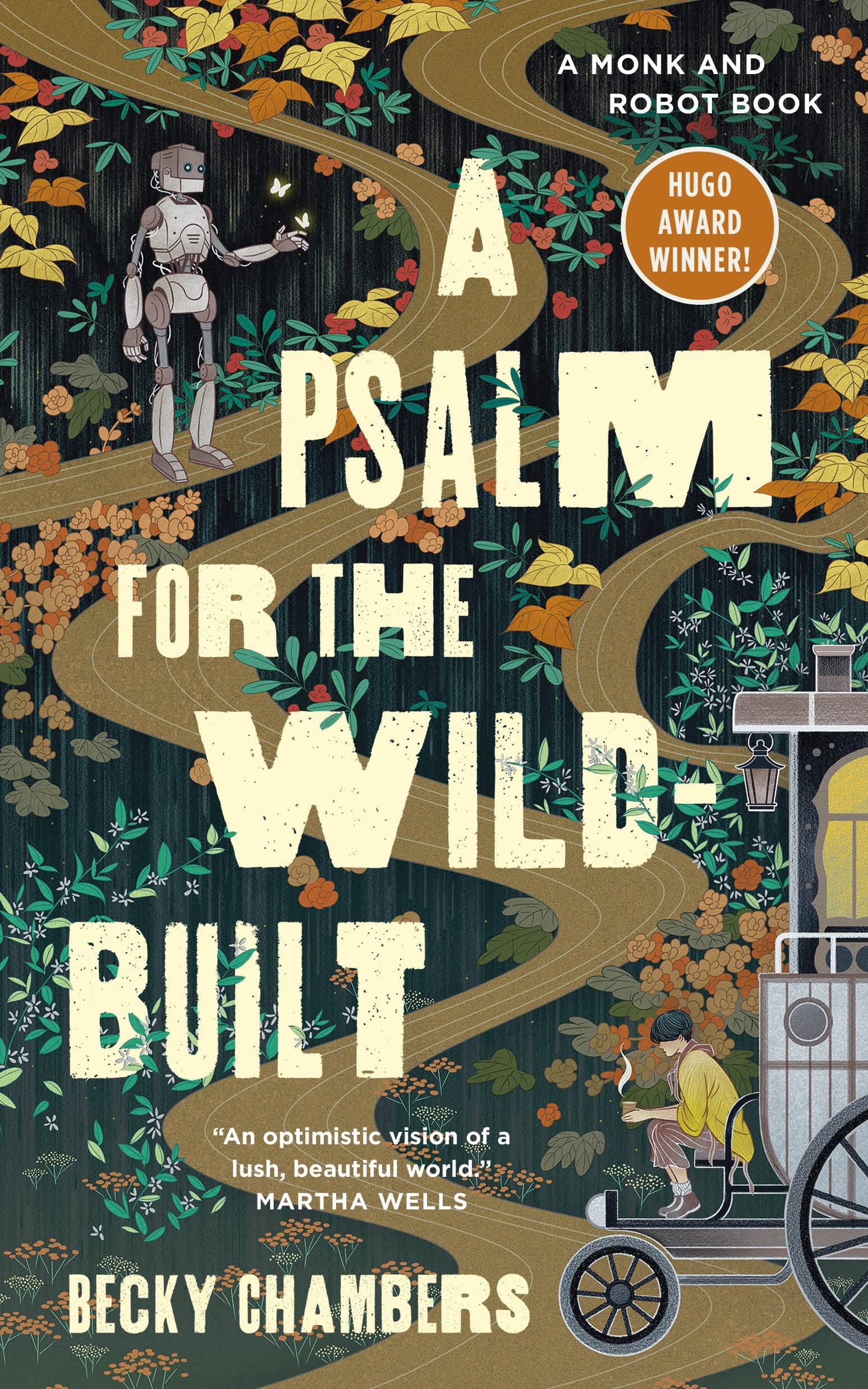
Centuries before, robots of Panga gained self-awareness, laid down their tools, wandered, en masse into the wilderness, never to be seen again. They faded into myth and urban legend.
Now the life of the tea monk who tells this story is upended by the arrival of a robot, there to honor the old promise of checking in. The robot cannot go back until the question of “what do people need?” is answered. But the answer to that question depends on who you ask, and how. They will need to ask it a lot. Chambers’ series asks: in a world where people have what they want, does having more matter?
I’m not sure what I had expected with this one, having only read the first couple of The Wayfarers’ series – a cosy science fiction space opera… This reflective, contemplative, beautiful novel was wonderful, but really not what I had anticipated!
Piranesi, Susanna Clarke

Piranesi lives in the House. Perhaps he always has.
In his notebooks, day after day, he makes a clear and careful record of its wonders: the labyrinth of halls, the thousands upon thousands of statues, the tides that thunder up staircases, the clouds that move in slow procession through the upper halls. On Tuesdays and Fridays Piranesi sees his friend, the Other. At other times he brings tributes of food to the Dead. But mostly, he is alone.
Messages begin to appear, scratched out in chalk on the pavements. There is someone new in the House. But who are they and what do they want? Are they a friend or do they bring destruction and madness as the Other claims?
Lost texts must be found; secrets must be uncovered. The world that Piranesi thought he knew is becoming strange and dangerous.
The Beauty of the House is immeasurable; its Kindness infinite.
After the intricately historical setting of Jonathan Strange and Mr Norrell, with its fairy tale and mythic, magical historicism – is that even a thing? – I had anticipated something similar in this long awaited next novel… and it is not. The setting is delicately, beautifully crafted but this impossible, infinite House of interminable hallways, seas, floods and clouds is a long remove from the Napoleonic Britishness of Jonathan Strange…
There were so many more that I could have included on this list… I look forward to reading other Top Ten Tuesday contributors lists this week, and any comment that anyone wanted to leave for me!
Have a great week!
Upcoming Top Ten Tuesday Themes
September 12: Favorite Character Relationships (These can be platonic or not. Romantic relationships, parent/child, siblings, family bonds, friendships, found families, pet/human, etc.)
September 19: Books on My Fall 2023 To-Read List
September 26: Secondary/Minor Characters Who Deserve Their Own Book
October 3: Reading Goals I Still Want to Accomplish Before the End of the Year (We’ve just begun the last quarter of the year! What bookish goals would you still like to accomplish? If you participated in TTT’s Bookish Goals for 2023 topic this past January, update us on which goals you’ve achieved, which you’ve given up on, and which ones you’re still working on!)
October 10: Bookish Jobs I Would Do For Free (Real or Imaginary) (Submitted by Susan @ Bloggin’ bout Books)
October 17: Books with Weather Events in the Title/on the Cover (I’m picturing a list of titles with weather-related words in them like storm, rain, blizzard, flood, lightning, hail, snow, wind, etc. OR covers with lightning/storms in the picture.)
October 24: Atmospheric Books (The Novelry explains this concept as: “A novel feels atmospheric when the setting and the narrative are deeply involved with one another; when characters and plot are physically embedded in their surroundings, and a near-tangible mood lifts from the pages and wraps itself around the reader.” Study.com explains that, “The atmosphere is how a writer constructs their piece to convey feelings, emotions, and mood to the reader. The atmosphere in literature might be tense, fast-paced, mysterious, spooky, whimsical, or joyful and can be found in poetry, stories, novels, and series.”)
October 31: Halloween Freebie


Booth is a book that has caught my attention a few times. I’m thinking it’s time to add it to my TBR. Best of luck on the new school year!
Pam @ Read! Bake! Create!
https://readbakecreate.com/books-ive-stopped-reading-recent-reads/
LikeLiked by 1 person
Oh my – somehow, I missed that Fowler had written a new book, and this one about Lincoln’s assassin – I need to read this. You’re right that We are all completely beside ourselves is a little “light” (and maybe that’s why it ended up not winning the Booker that year?) but I also found the premise a bit unsettling.
As for Piranesi, hands-down loved it last year (is it last year already?), it was like stepping into a strange dream.
LikeLiked by 1 person
I’m glad these books were able to defy your expectations. I love when it happens to me with books.
LikeLiked by 1 person
I agree! Sometimes you just want a book to be exactly what you’re expecting it to be. It’s fun, though, when it turns out to be that plus more. A nice surprise for sure.
Happy TTT!
Susan
http://www.blogginboutbooks.com
LikeLike
It’s always nice when a book surprises you in a good way at least!
My TTT: https://jjbookblog.wordpress.com/2023/09/05/top-ten-tuesday-436/
LikeLike
Piranesi is one of my favorite books. It’s so strange. I’ve the Psalms on my TBR.
LikeLike
[…] 5th September: Books That Defied My Expectations […]
LikeLike
[…] 5th September: Books That Defied My Expectations […]
LikeLike
[…] 5th September: Books That Defied My Expectations […]
LikeLike
[…] 5th September: Books That Defied My Expectations […]
LikeLike
[…] 5th September: Books That Defied My Expectations […]
LikeLike
[…] 5th September: Books That Defied My Expectations […]
LikeLike
[…] 5th September: Books That Defied My Expectations […]
LikeLike
[…] 5th September: Books That Defied My Expectations […]
LikeLike
[…] 5th September: Books That Defied My Expectations […]
LikeLike
[…] 5th September: Books That Defied My Expectations […]
LikeLike
[…] 5th September: Books That Defied My Expectations […]
LikeLike